Current Advisors
With the advisers’ foresight and wisdom, the QS Awards have promoted and advocated for sci & tech development. They exemplify academic excellence as well as the “Qiu Shi spirit” –the desire to seek the truth.
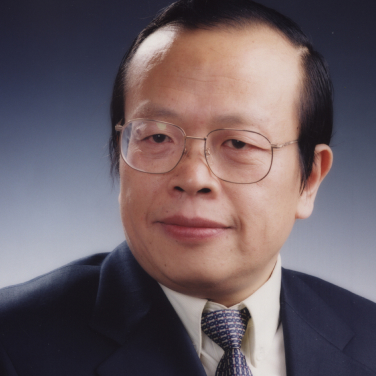
Professor Bangfen ZHU
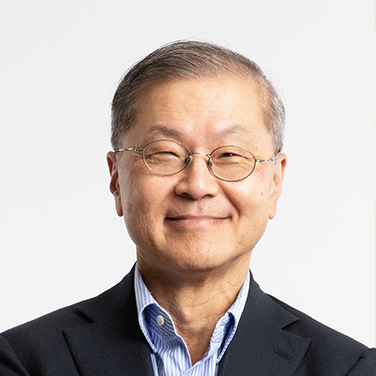
Professor David HO
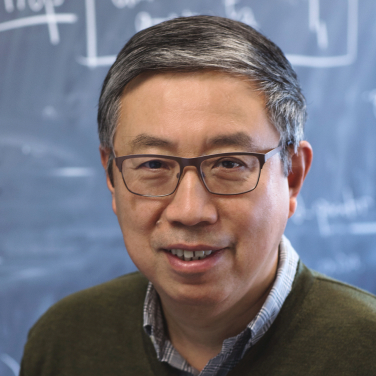
Professor Gang TIAN
Professor Jiadong SUN
Professor Bangfen ZHU
Bangfen Zhu is a member of the Chinese Academy of Sciences and a fellow of the Institute of Physics in UK.
Professor Zhu obtained his B.S. degree in engineering physics from Tsinghua University in 1970 and his M.S. degree in solid-state physics from Tsinghua University in 1981. During 1981 to 2000, he had served as a research assistant, a research associate, and a researcher at the Institute of Semiconductors of the Chinese Academy of Sciences. Since 2000, he has been a professor at the Institute of Advanced Study and the Department of Physics of Tsinghua University. He also served as the Dean of the Faculty of Science and the Head of Department of Physics at Tsinghua University.
Professor Zhu’s research mainly focuses on the structures of electron, the mode of phonon and the electron-phonon interactions in low-dimensional structures, and their effects on the optical and transport properties of various condensed matters. Together with Professor Huang Kun, they established the semiconductor superlattice optical phonon mode theory, which was named by the international academic community as the “Huang-Zhu model”.
Professor David HO
David Ho is the Scientific Director of the Aaron Diamond AIDS Research Center and the Clyde and Helen Wu Professor of Medicine, as well as Professor Microbiology and Immunology, at Columbia University Medical Center. He graduated from California Institute of Technology (1974) and Harvard Medical School (1978).
Dr. Ho has been at the forefront of AIDS research for 40 years. His elegant studies unraveled the dynamic nature of HIV replication and revolutionized our understanding of this horrific disease. This knowledge led him to champion combination antiretroviral therapy that resulted in unprecedented control of HIV in patients beginning in 1996.
Dr. Ho has published ~500 scientific papers and received fifteen honorary doctorates from universities worldwide. He was named Time Magazine’s Man of the Year (1996), the recipient of a Presidential Medal from Bill Clinton (2001), recognized by the Kingdom of Thailand with the Prince Mahidol Award in Medicine (2014) and given the Distinguished Alumni Award by Caltech (2015). He was also inducted into the California Hall of Fame (2006). Dr. Ho serves as a member of the Trustees of Caltech, was a board member of the MIT Corporation and Harvard Board of Overseers. He is a member of the National Academy of Medicine (1997) as well as the Chinese Academy of Engineering (2004).
Professor Gang TIAN
Gang Tian has made fundamental contributions to geometric analysis, complex geometry and mathematical physics. He did his undergraduate study at Nanjing University in China, MS at Peking University and PhD at Harvard University. He was a professor at Courant Institute of NYU, a Simons professor at MIT and a Higgins professor at Princeton University. He is now a Chair Professor of Peking University. He has been the director of Beijing International Center for Mathematical Research (BICMR) since 2005 and was elected as Member of the IMU Executive Committee from 2019 to 2022 and President of Chinese Mathematical Society from 2020 to 2023.
Professor Tian provided solutions to a series of major problems in geometry and mathematical physics. He pioneered in proving the associativity relations in quantum cohomology, constructed the symplectic Gromov-Witten invariants, and solved the nondegeneracy of the Arnold conjecture in symplectic geometry. Professor Tian has made outstanding contributions in the research on Mathematical Gauge theory in higher dimensions and on areas including curvature flow in low dimensional manifolds.
Professor Tian won Alan T. Waterman Award in 1994 and Veblen Prize in 1996. He spoke twice at the International Congress of Mathematics in 1990 and 2002. He was elected to the National Academy of China in 2001 and the American Academy of Arts and Science in 2004.
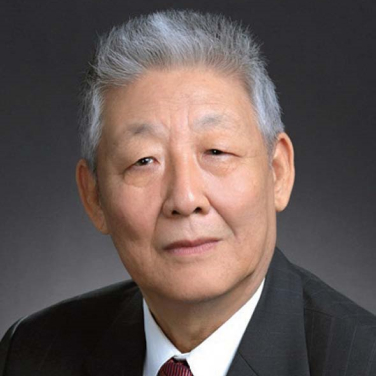
Professor Jiadong SUN
Jiadong Sun, a renowned aerospace engineering and technology expert, is an academician of the Chinese Academy of Sciences and a member of the International Academy of Astronautics.
Professor Sun led the development and launch of dozens of satellites, including China’s first artificial Earth satellite, Dongfanghong-1, which represents several firsts in China’s aerospace history. He also led the development of China’s lunar exploration and Beidou navigation major aerospace projects, making significant contributions to China’s breakthroughs in artificial satellite technology, satellite return technology, geostationary orbit satellite launch and positioning technology, satellite navigation network technology, and deep space exploration technology. He is one of the pioneers in China’s artificial satellite technology, deep space exploration technology, and satellite navigation technology.
Professor Sun has been honored with four National Science and Technology Progress Awards, including the Special Prize. He received the Meritorious Service Medal for “Two Bombs and One Satellite” in 1999, the National Highest Science and Technology Award in 2009, and the Medal of the Republic in 2019.
Professor Xiaodong WANG
Professor Xiaoliang Sunney XIE
Professor Yigong SHI
Professor Yuetwai KAN
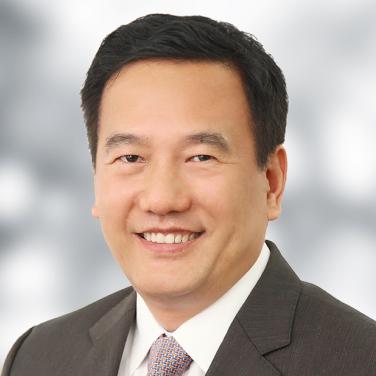
Professor Xiaodong WANG
Xiaodong Wang is a member of the US National Academy of Sciences and a foreign member of the Chinese Academy of Sciences. He graduated from Beijing Normal University in 1984 and received his PhD Degree in biochemistry from University of Texas Southwestern Medical Center in 1991. He is currently Director and Investigator of Beijing’s National Institute of Biological Sciences and Chair Professor of Tsinghua Institute of Multidisciplinary Biomedical Research.
Since 1995, Dr. Wang’s research has mainly dedicated to the study of programmed cell death. Defects in programmed cell death are a key step in the development of cancer, auto-immune diseases and degenerative diseases. Dr. Wang has been awarded many accolades, including the Shaw Prize in Life Science and Medicine, the Qiu Shi Outstanding Scientist Award, and King Faisal Prize in Science.
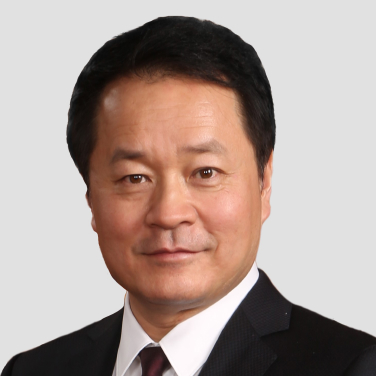
Professor Xiaoliang Sunney XIE
Xiaoliang Sunney Xie, an internationally renowned biophysical chemist, is a member of Chinese Academy of Sciences, a foreign member of the US National Academy of Sciences and US National Academy of Medicine.
Professor Xie received his BSc in chemistry from Peking University (1984), and his PhD in physical chemistry from UC San Diego (1990). After a brief postdoctoral appointment and a six-year career at Pacific Northwest National Laboratory, he became the first tenured professor at Harvard University among Chinese scholars who went to the US since the reform in China. He was the Mallinckrodt Professor of Chemistry and Chemical Biology at Harvard University (2009 to 2018). Starting July of 2018, he became the Lee Shau-kee Professor of Peking University. Among his numerous honors are the Albany Medical Center Prize in Medicine and Biomedical Research, the American Chemical Society’s Peter Debye Award, the Biophysical Society Founders’ award and the Qiu Shi Award.
As a pioneer of single molecule biophysical chemistry, coherent Raman scattering microscopy, and single cell genomics, he made major contributions to the emergence of these fields, and also has made advances on medical applications of label-free optical imaging and single cell genomics. In particular, his inventions for in vitro fertilization have benefited thousands of couples in China in avoiding the transmission of their monogenic diseases to newborns.
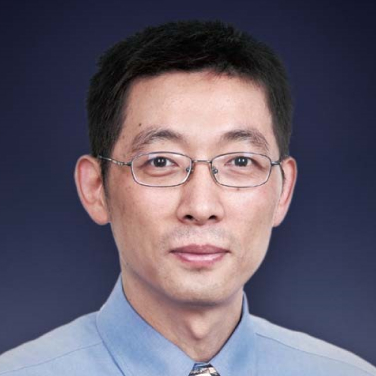
Professor Yigong SHI
Yigong Shi is the founding President of Westlake University, an Academician of the Chinese Academy of Sciences, Deputy President of the China Association for Science and Technology, and Deputy President of the Western Returned Scholars Association. He is also a Foreign Associate of the United States National Academy of Sciences and an Honorary Foreign Member of the American Academy of Arts and Sciences.
Dr. Shi graduated from Tsinghua University (1989) and received his Ph.D. in Biophysics at Johns Hopkins University School of Medicine (1995). Following a two-year postdoctoral research period at the Memorial Sloan-Kettering Cancer Center, he joined Princeton University and was promoted to Full Professor in 2003. He was named Warner-Lambert/Parke-Davis Professor of Molecular Biology in 2007. He returned to Tsinghua University in 2008. Since 2018, he has been the founding president of Westlake University.
Dr. Shi’s research has provided important insights into programmed cell death, regulated intramembrane proteolysis, and pre-mRNA splicing. He received several awards incl Irving Sigal Young Investigator Award from the Protein Society (2003), Outstanding Scientist Award from the Qiu Shi Science and Technologies Foundation (2010), Sackler Prize in Biophysics (2010), Gregori Aminoff Prize from the Royal Swedish Academy of Sciences (2014) and Future Science Prize – Life Science Award (2017).
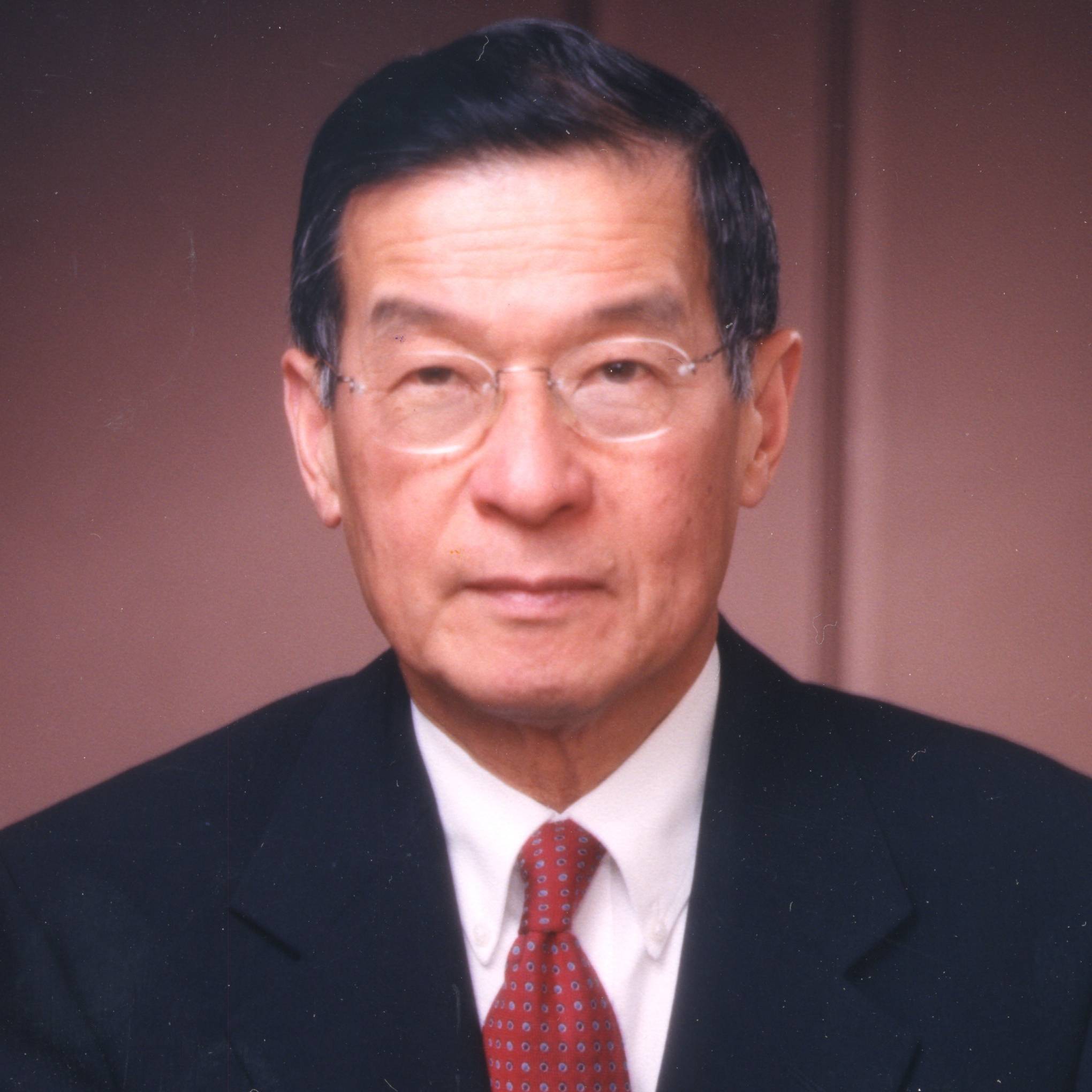
Professor Yuetwai KAN
Yuetwai Kan is a renowned pioneer of human genetics and hematologist. He is a member of the Royal Society, National Academy of Sciences and Chinese Academy of Sciences. He obtained his MB, BS from the University of Hong Kong in 1958.
Professor Kan has made outstanding contributions to the study of genetic hematological disorders. In 1974, he discovered that thalassemia is caused by gene deletions and developed a prenatal diagnosis DNA testing technique. Since 1972, Professor Kan has been teaching at the University of California, San Francisco (UCSF) School of Medicine and currently holds the Louis K. Diamond Distinguished Chair in Hematology at UCSF. In 1991, he received the prestigious Lasker Clinical Medical Research Award, being the sole recipient that year. He has also been honored with the Gairdner Foundation International Award and the Shaw Prize.
Former Advisors
Professor Jiadong SUN
Professor Yuet Wai KAN
Professor Jiadong SUN
Jiadong Sun, a renowned aerospace engineering and technology expert, is an academician of the Chinese Academy of Sciences and a member of the International Academy of Astronautics.
Professor Sun led the development and launch of dozens of satellites, including China’s first artificial Earth satellite, Dongfanghong-1, which represents several firsts in China’s aerospace history. He also led the development of China’s lunar exploration and Beidou navigation major aerospace projects, making significant contributions to China’s breakthroughs in artificial satellite technology, satellite return technology, geostationary orbit satellite launch and positioning technology, satellite navigation network technology, and deep space exploration technology. He is one of the pioneers in China’s artificial satellite technology, deep space exploration technology, and satellite navigation technology.
Professor Sun has been honored with four National Science and Technology Progress Awards, including the Special Prize. He received the Meritorious Service Medal for “Two Bombs and One Satellite” in 1999, the National Highest Science and Technology Award in 2009, and the Medal of the Republic in 2019.
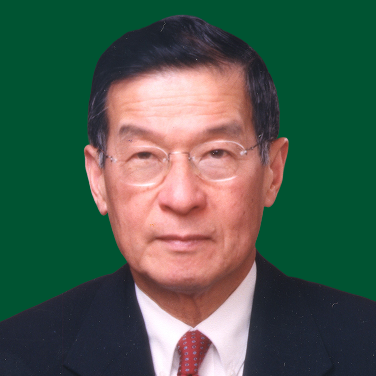
Professor Yuet Wai KAN
Professor Yuet Wai KAN